PRACTICAL NOTE · AUTUMN GREENHOUSE
A drier greenhouse
by dusk.
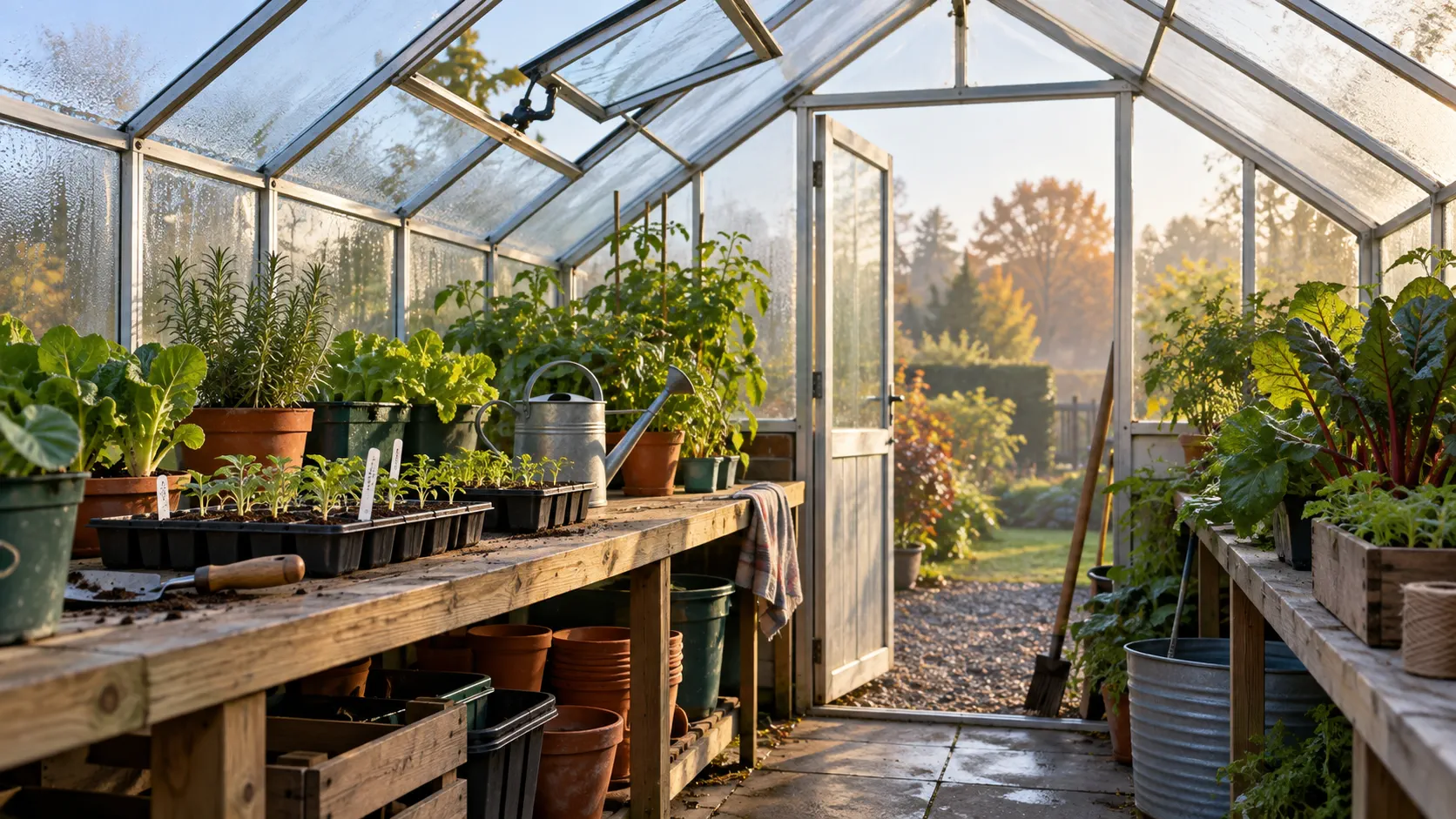
The evenings are drawing in. A small change to the timing of watering and a sensible look at airflow can help keep a greenhouse from staying damp all night.
Why the evening matters
As days shorten and nights cool, a greenhouse can hold damp air for longer. The Royal Horticultural Society advises doing watering or damping down early enough for the greenhouse to dry by evening. Cool, damp nights can encourage grey mould (Botrytis) and damping off in seedlings.
Grey mould is common and its spores are present in the environment. The aim is not to make a greenhouse sterile; it is to avoid leaving dead plant material and unnecessary humidity where you can, and to give plants sensible air movement.
A five-minute autumn check
- Water earlier in the day. Check the growing medium before reaching for the can. Water the plants that need it, rather than wetting everything by habit.
- Use the warmer part of the day for airflow. If conditions are mild, open vents or the door to exchange air. As the day cools, adjust ventilation to protect plants from cold; there is no one setting for every greenhouse.
- Look for crowding. Move pots apart where practical so air can circulate around leaves and stems.
- Clear dead or dying material. Remove it promptly. If you see fuzzy grey-brown growth on decaying tissue, handle the affected material carefully: RHS advises enclosing it in a bag before or immediately after removal, because spores disperse easily.
- Make one note. Record what you actually observed—condensation, temperature if measured, and any action taken. That is more useful than guessing what happened overnight.
What to watch for—and what not to assume
Fuzzy grey-brown growth on decaying buds, leaves, flowers or fruit can be a sign of grey mould, but a photograph or one symptom is not always enough to identify a plant problem. Check the plant and growing conditions before deciding what it is. If the problem is spreading or you are unsure, use a reliable plant-health adviser.
This is a prevention routine, not a promise that disease can be eliminated. Avoid unnecessary spraying: the RHS notes that no fungicides are approved for gardeners to use against grey mould.
“Water while the day still has time to dry things out. Then let the greenhouse tell us what it needs.”
Sources: RHS September greenhouse advice and RHS grey mould guidance. General beginner guidance only; local weather, plant needs and actual greenhouse conditions take priority.